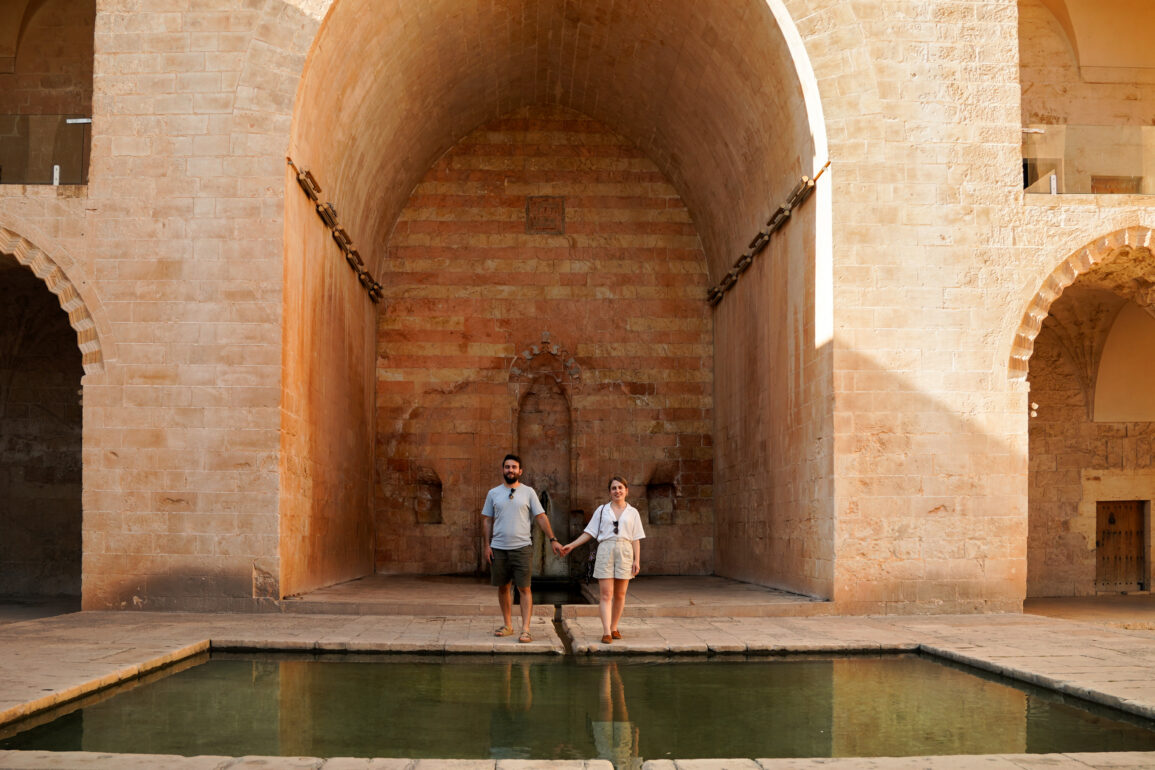
Mardin was the city in southeastern Anatolia that impressed us the most. To truly discover Mardin, you need to look beyond its stone houses and beautiful views and explore the stories of the different cultures that have lived here for centuries.
In this article, we introduce Kasımiye Madrasa, Deyrulzafaran Syriac Monastery, and Dara Ancient City, all of which are an integral part of Mardin’s cultural heritage. Here is our guide to Mardin Travel Guide: Kasımiye Madrasa, Deyrulzafaran Monastery and Dara Ancient City!
Mardin Travel Guide: Kasımiye Madrasa, Deyrulzafaran Monastery and Dara Ancient City
In this article, we take a detailed look at the places you can visit on day trips from Mardin. Without further ado, let’s begin our Mardin travel guide!
Kasımiye Madrasa
Kasımiye Madrasa was one of the buildings in Mardin that impressed us the most. In the Islamic world, the term madrasa refers to an institution that provides secondary and higher education. In other words, you can think of it as a higher education institution today.
Places to Explore at Kasımiye Madrasa
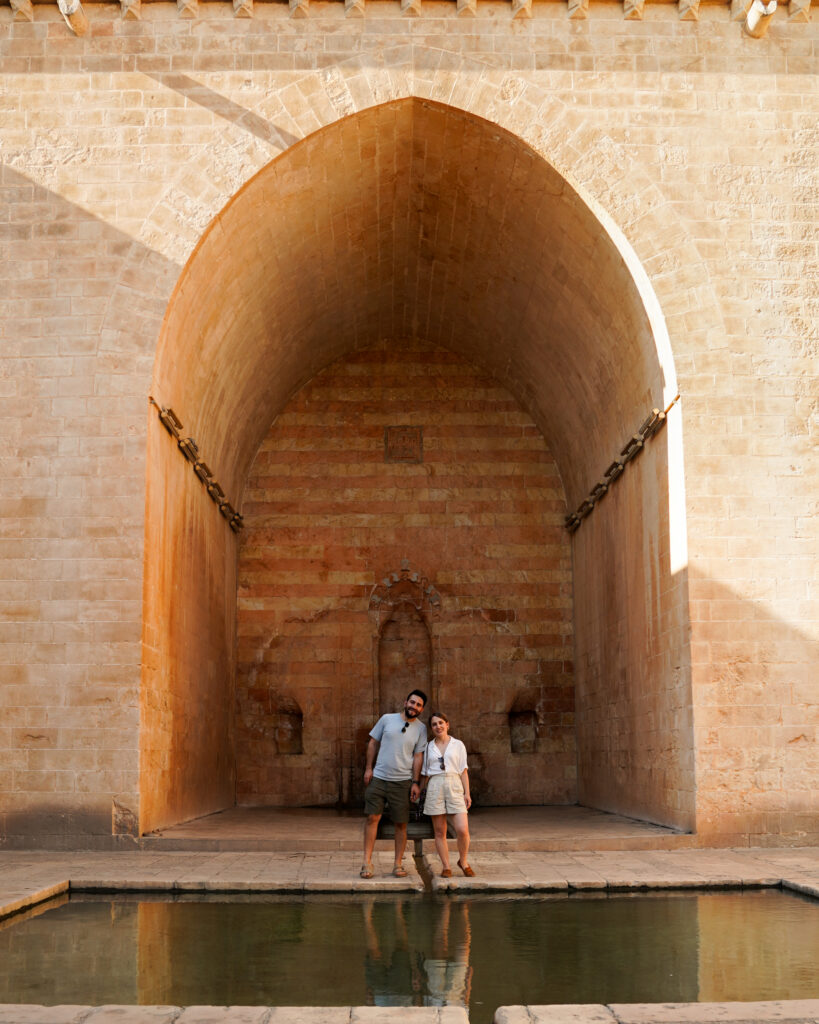
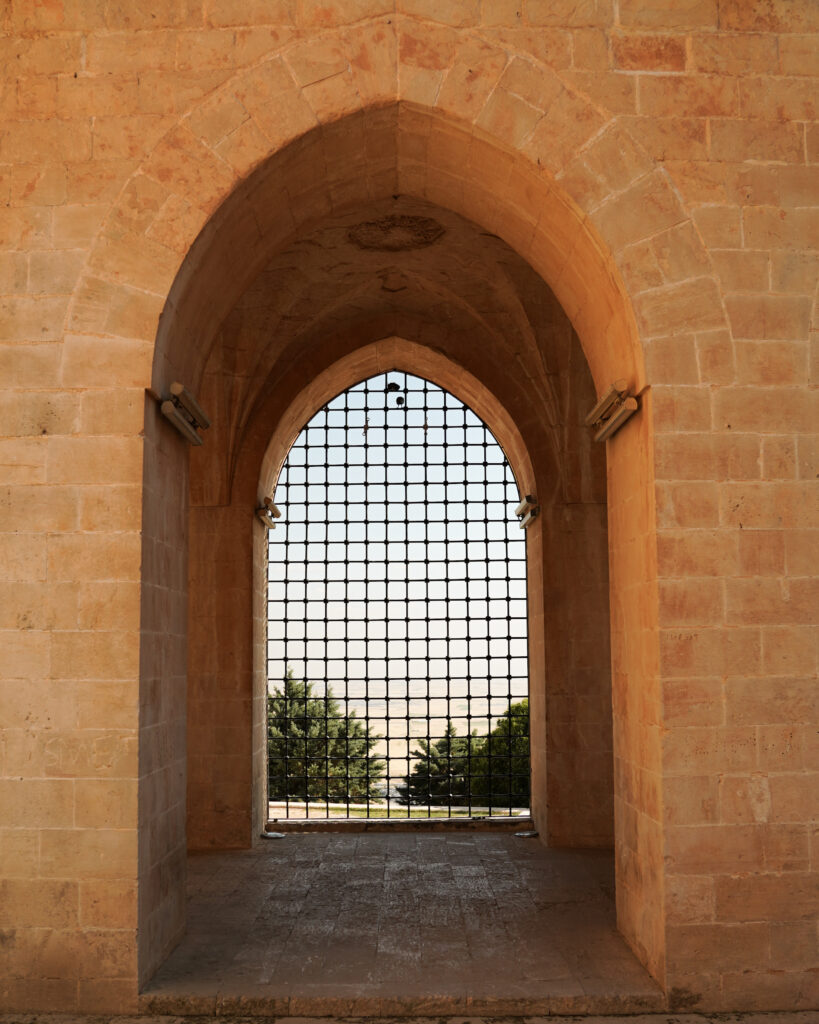
Built from Mardin’s characteristic yellow limestone, Kasımiye Madrasa impressed us from the moment we arrived with its monumental entrance portal. The floral and geometric motifs carved along the edges of the doorway are so meticulously crafted. Once you look a little closer, you begin to appreciate the incredible level of detail in the stonework.
As you enter, you are greeted by a spacious courtyard surrounded by arcades. The madrasa is arranged over two floors and has a total of 23 rooms.
What caught our attention most at Kasımiye Madrasa was the water system in the middle of the courtyard. Water flows from a fountain in one corner, passes through small pools and channels, and eventually collects in the central pool. At first glance, it looks like a beautiful architectural feature, but the water’s journey also carries a Sufi meaning.
The flow of water symbolizes the stages of human life: birth, infancy, childhood, youth, old age, and the Day of Judgment, representing the end of life as we know it. In other words, the journey of the water is compared to the journey of human life. When you look at it this way, even gazing at the pool in the middle of the courtyard feels different.
If you pay attention to the madrasa’s classrooms, you will discover other interesting details. The classroom doorways are approximately one meter high. Considering that a standard door is around two meters tall, these entrances are remarkably short. It is believed that the doors were designed this way so that students would bow their heads as a sign of respect when entering their teachers’ rooms.
The symbols above the doors are also fascinating. They are thought to have indicated the subject taught in each room at the time. In addition to religious education, the madrasa is also known to have taught scientific subjects such as medicine, astronomy, mathematics, and chemistry during its active years.
On one hand, there is centuries-old stone craftsmanship; on the other, the journey of water through the courtyard. The fact that this journey also carries a symbolic meaning related to human life is one of the details that makes Kasımiye Madrasa so special.
When you look out from the courtyard, you can see the Mesopotamian Plain. Simply standing here for a few minutes and taking in the view is a wonderful experience in itself.
How to Get to Kasımiye Madrasa
You can reach the madrasa from central Mardin in approximately 15 minutes by car.
Deyrulzafaran Monastery
If you visit Mardin and genuinely want to understand the city’s multicultural past, we highly recommend leaving the streets of Old Mardin behind and visiting Deyrulzafaran Monastery. This monastery is one of the most important religious and cultural centers of the Syriac community. A small group of people still lives at the monastery today.
Places to Explore at Deyrulzafaran Monastery
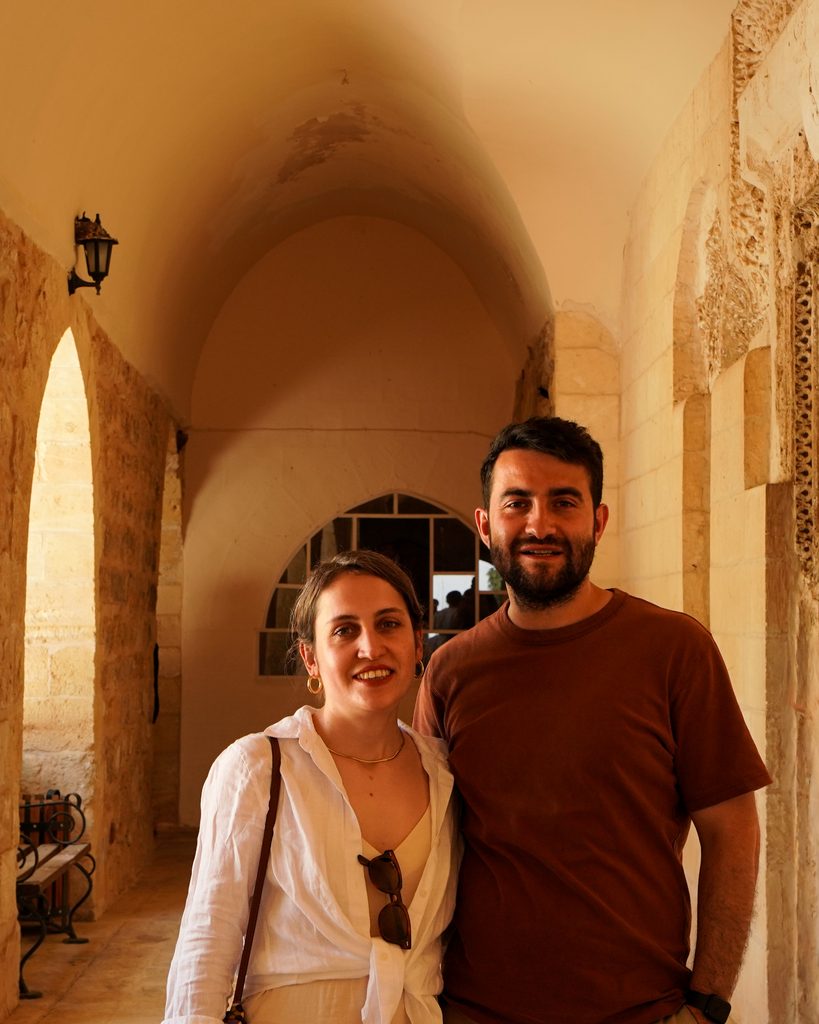
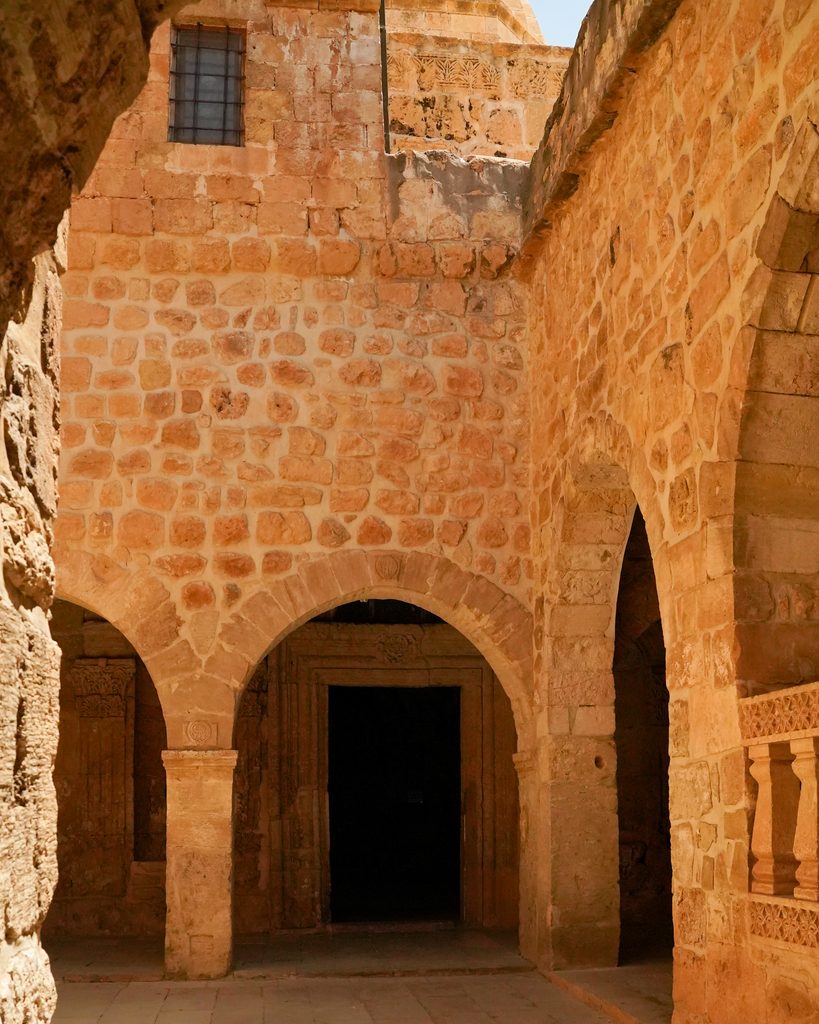
The history of Deyrulzafaran Syriac Monastery dates back to the fourth century. The site is particularly interesting because it was used as a Temple of the Sun before the advent of Christianity. Later on it has served as a fortress during Roman times. It was eventually converted into a monastery.
The name Deyrulzafaran Monastery means “Monastery of Saffron.” It is said to have received this name because saffron plants grew in the surrounding area. We found this particularly interesting.
As you explore the interior, you begin to understand that the monastery is much more than a place of worship. For centuries, it has been an important center for the religious, educational, and cultural life of the Syriac community.
A printing press was also established at the monastery in 1876. It played an important role in preserving Syriac culture and its written heritage.
One of the monastery’s most remarkable sections is the Temple of the Sun. Located on the lowest level of the building, this area provides an important glimpse into the site’s pre-Christian past.
There is also a church within the monastery. Beyond these features, the craftsmanship of the building, constructed from Mardin’s characteristic yellow limestone, is particularly impressive.
From the hill where the monastery stands, you can also enjoy views across the Mesopotamian Plain.
If you are interested in Syriac history and Mardin’s cultural diversity, we recommend placing Deyrulzafaran Monastery to your travel itinerary.
Since this is a place of worship, visitors are expected to cover their shoulders and legs. It is a good idea to bring a shawl with you.
We also recommend trying the white and red Syriac wines produced at the monastery before you leave. You can also find telkari jewelry here, a traditional regional craft involving intricate filigree work.
How to Get to Deyrulzafaran Monastery
The monastery is located approximately four kilometers east of Mardin. Unfortunately, there is no public transportation directly to the site. However, many tour companies organize trips there.
We think traveling by car is the most convenient option. You can reach the monastery from central Mardin in approximately 20 minutes.
Dara Ancient City
When you travel approximately 30 kilometers from Mardin, an unexpected sight appears in the middle of Mesopotamia: Dara Ancient City.
When you learn that this place, which looks so peaceful today, was once one of the most important cities of the Eastern Roman Empire, even the way you look at the stones around you begins to change.
Dara was founded in the sixth century by an Eastern Roman emperor as an important military center against the Sasanian Empire. Because it was situated in the border region between the Roman and Sasanian empires, the city was also strategically significant.
For this reason, Dara was designed not simply as a settlement but also as an important military base and defensive center.
Dara Ancient City covers a vast area, and archaeological excavations have yet to uncover the entire ancient settlement. The ruins visible today represent only the portion of a much larger city that has been brought to light. As we walked among the remains, we couldn’t help wondering, “What else might be hidden here?”
Before we continue, it is worth mentioning that entrance to the archaeological site is free. Now, let’s take a closer look at some of its most important structure.
The Necropolis of Dara Ancient City
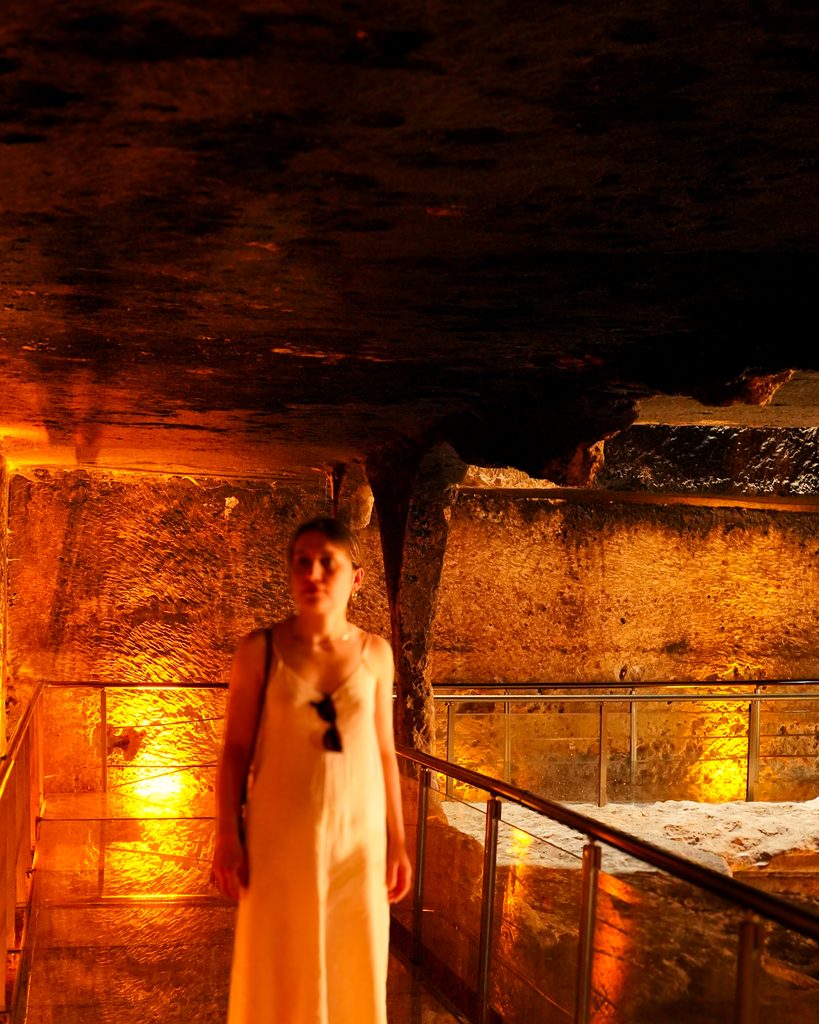
One of the places that surprised us most while exploring Dara was undoubtedly the necropolis. The rock-cut tombs and large communal burial structure offer insights into the burial customs of the period while also making you wonder how large the city’s population must have been. The section known as the “gallery tomb” is particularly impressive.
In some places, you encounter chambers, columns, and passageways carved directly into the rock. Suddenly, you feel as though you are not simply walking through an ancient city but standing in the middle of a story that has unfolded over thousands of years.
The Water Cistern of Dara Ancient City
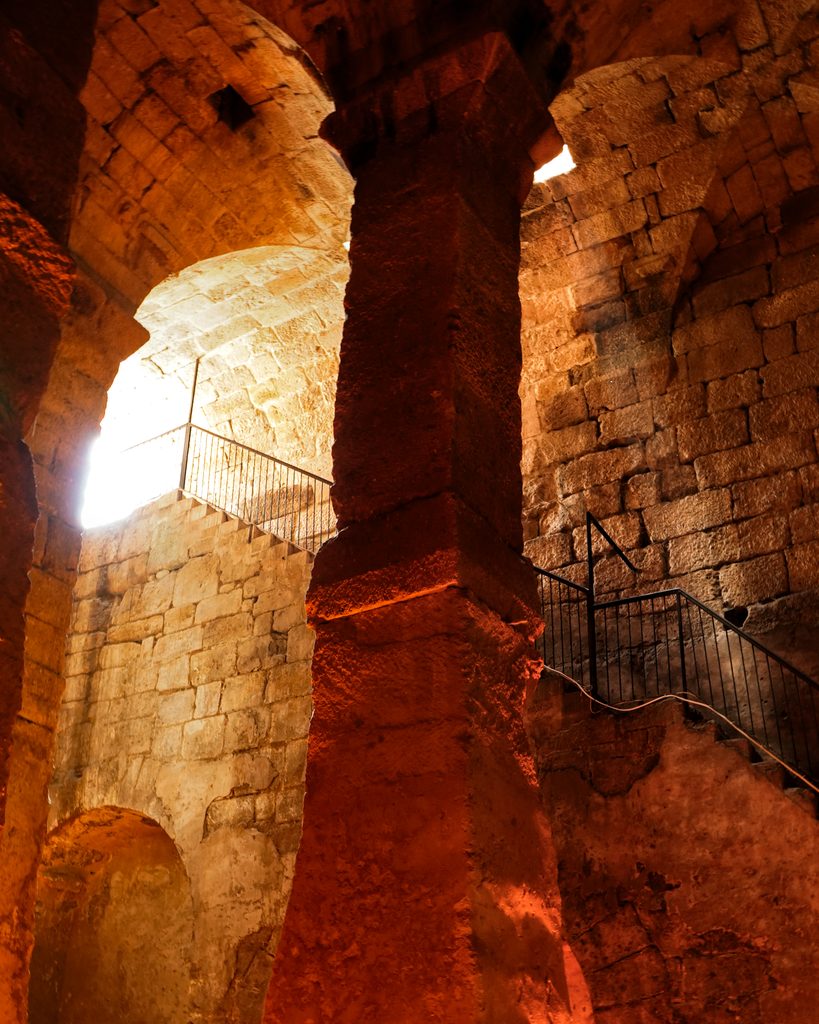
Another remarkable structure in Dara is the enormous underground water cistern. It is one of the structures that demonstrates how advanced the city was in terms of engineering. When you consider the region’s dry climate, you begin to understand just how important water must have been here.
The stairs leading down into the cistern are quite steep. If you have knee problems, the descent may be somewhat challenging.
One of the most fascinating aspects of Dara is that the ancient city and the local community living there today still coexist. As you explore the ruins, you may suddenly come across a centuries-old structure with a modern, inhabited house right beside it. Rather than feeling like an open-air museum frozen in the past, Dara remains a living settlement where people continue their everyday lives.
For example, a house has been built directly over the water cistern mentioned above, and it is still actively used today. Seeing people continue to live just above a structure that is thousands of years old reveals the powerful connection between the past and the present.
We believe that historical heritage like this deserves better protection and greater appreciation.
The Agora of Dara Ancient City
The city also has an agora, which is believed to have been an important gathering place for trade and social life in ancient times.
Today, walking among the remaining columns and stone structures and imagining how this space might once have been used is fascinating in itself.
How to Get to Dara Ancient City
You can reach Dara Ancient City from central Mardin in approximately 40 minutes by car.
And with that, we have reached the end of our article, Mardin Travel Guide: Kasımiye Madrasa, Deyrulzafaran Monastery, and Dara Ancient City.
We wish you wonderful travel!
Did you know that we don’t just share on the blog? We also share on Instagram and Facebook. We would be very happy if you follow us on social media!
Also read: How to Spend 4 Days in Paris in Winter, Nice Travel Guide: The Pearl of The French Riviera, The Best Restaurants in Stuttgart From Local, Amsterdam Travel Guide: Places to See in Amsterdam, A Complete Hamburg Travel Guide: Top Places in Hamburg

